The name is no coincidence: the puli, the ever-active ancient Hungarian dog breed, embodies the restaurant’s playful, hospitable spirit, while the shepherd (juhász) brings the good humour and wisdom of the Hungarian puszta, its quiet order and – when needed – the homemade pálinka too.
A new yet long-familiar face of Hungarian gastronomy has arrived in the heart of downtown Pest: on 17 July, Puli és Juhász, a joint restaurant of Semsei Gastronomy and the Stifler group, opened its doors on the corner of Dob utca and Síp utca.
The new venue is a true co-production: the owners of Stifler and Semsei Gastronomy dreamt it up together, and it has resulted in something entirely new in both owners’ portfolios.
The plan was to create a clean, Hungarian-style concept, which – as they pointed out – turned out to be harder than they had first thought. At the opening, however, it was already clear that everything had come together perfectly: after the Budapest Bites lángos bar, this is the second step in the owners’ plan, a third element of which will open soon – but more on that later.
The csárda atmosphere, reloaded
The genre has been reinterpreted without dusty, kitschy elements, while preserving everything the old csárdas (traditional Hungarian inns) did well: the atmosphere, the experience and the hospitality.
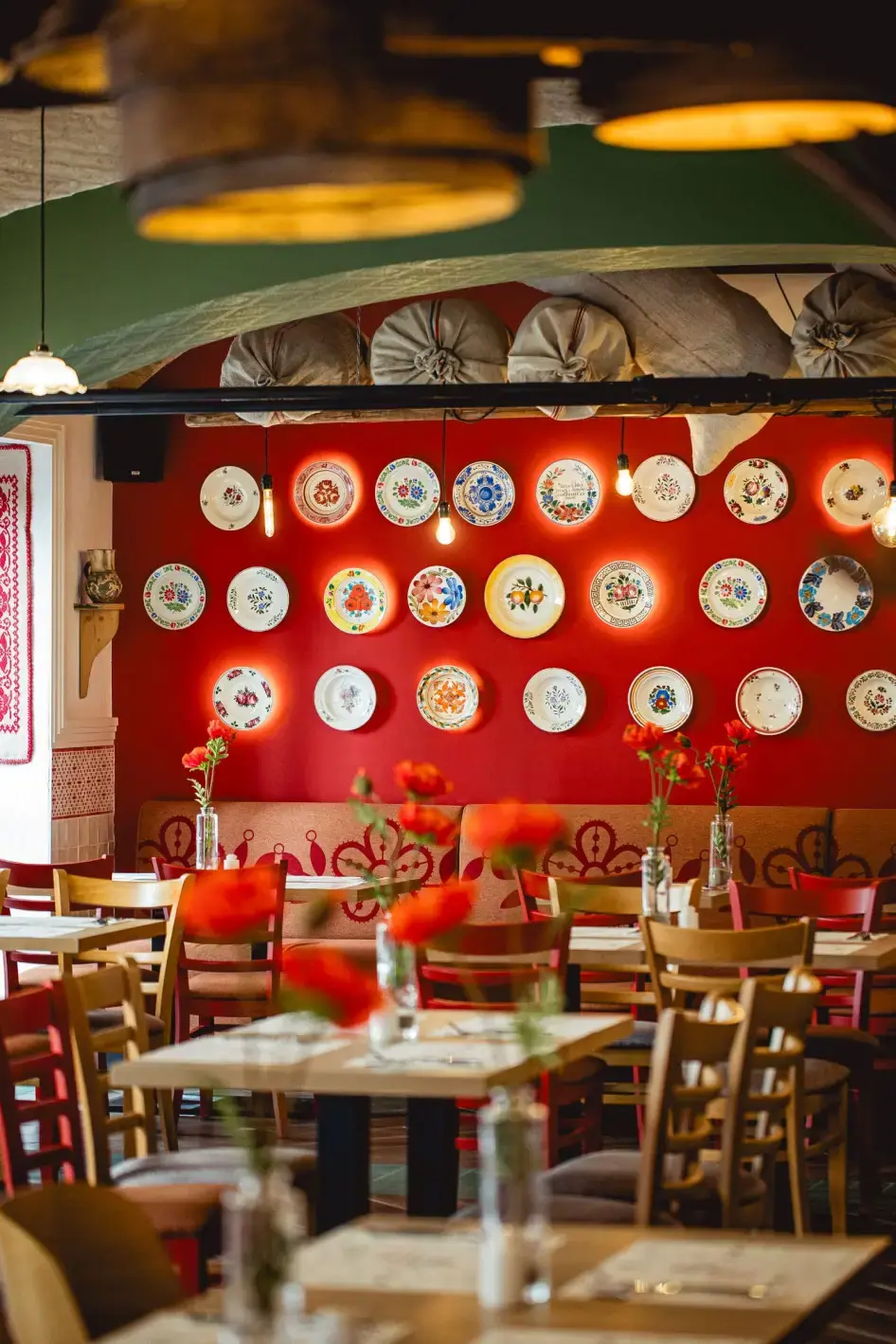
The restaurant’s interior is authentically Hungarian: original handmade ceramics, ornaments and furniture from the countryside… everything evokes the traditions of the Great Plain, reinforcing the atmosphere of the Hungarian puszta.
“The Hungarian style has been on our minds for a long time, and over the past few months we have talked a lot about what it means to be ‘Hungarian-style’ today,” explained Semsei Rudolf, owner of Semsei Gastronomy, describing how the idea for the restaurant was born.
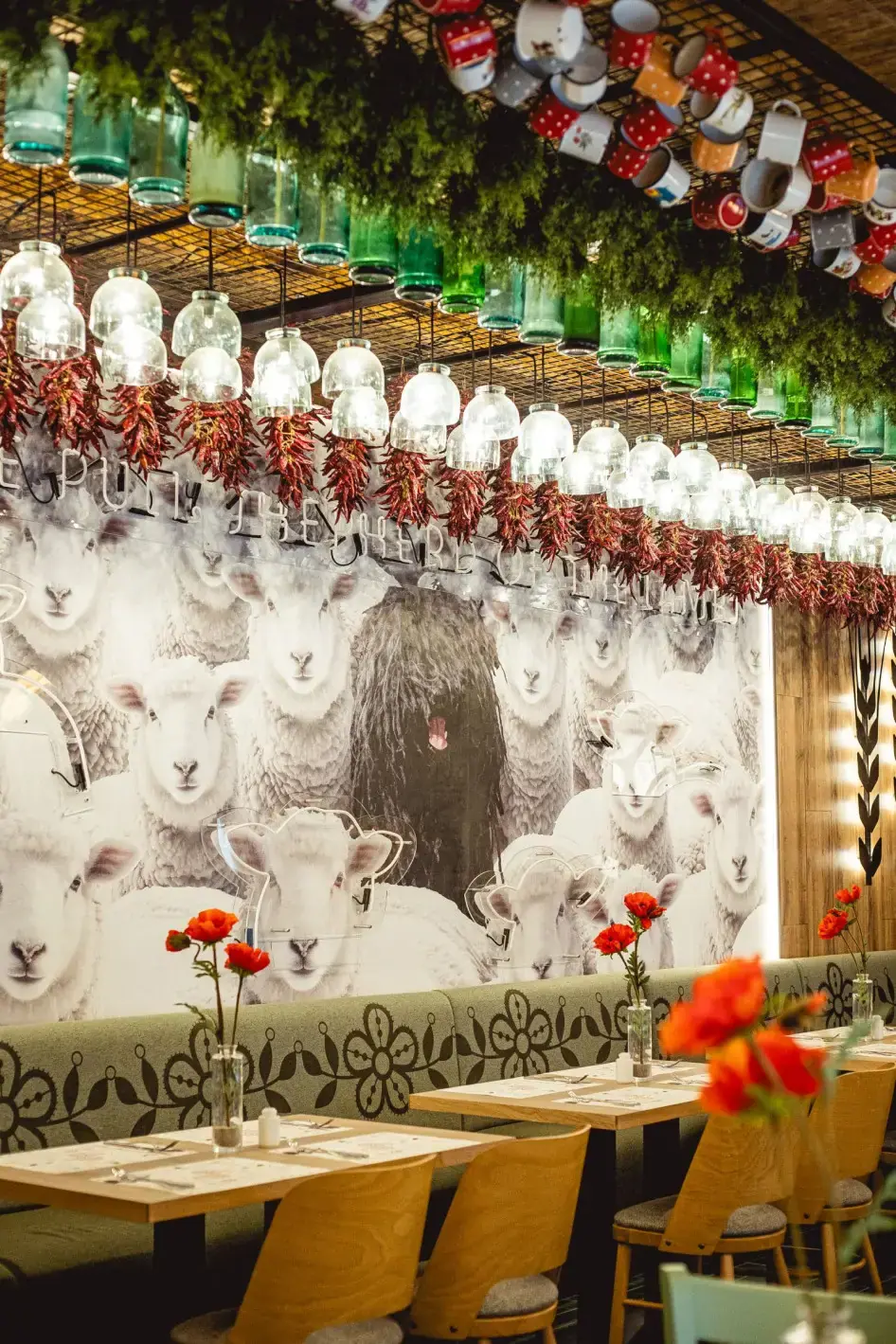
The work of interior designers Oláh Nikolett and Felhő Anita tastefully and boldly combines traditional motifs with fresh, playful design. The graphics of sheep and a puli gazing down from the wall create a humorous and memorable contrast with the traditional atmosphere, while the strings of paprika and enamelled mugs hanging from the ceiling evoke an authentic peasant milieu. The cartwheel decorations on the walls and the other folk motifs further evoke the world of rural Hungarian farmhouses.
The csárda atmosphere also comes through on the plates
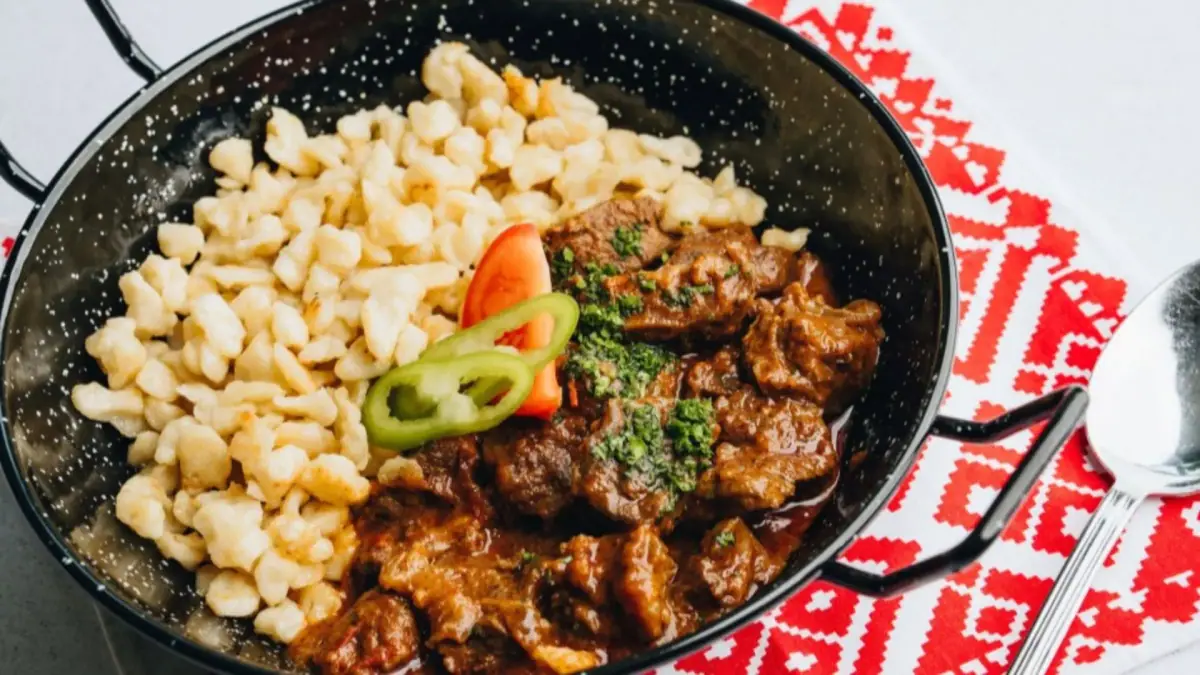
…the crackling crunches, the pörkölt stew steams, the túrós csusza (curd cheese pasta) fills the air with its aroma, as if we were stepping out of grandma’s kitchen into another era.
An important part of the concept was to return to basics in gastronomic terms too, as the aim was to create no-frills, genuine Hungarian cuisine. The ingredients are the tastiest products of small Hungarian producers, so that diners can feast on dishes that are not only high-quality but authentic too. The menu was put together with head chef Turger Ábrahám, creative chef Balogh Krisztián and gastronomy expert Harmath Csaba.
The menu features classic dishes such as chicken pörkölt, marrow bone, tripe, Gödöllő-style chicken leg, duck liver and stuffed peppers, with aranygaluska (golden dumplings) and mákos guba (poppy seed bread pudding) among the desserts – but those looking for lighter dishes have not been forgotten either, with pikeperch fillet with creamed marrow, goat’s cheese and even vegan stuffed cabbage.
“We are not following a trend, we are serving up history. Puli és Juhász is a place where you not only eat well but also feel a little bit at home. The puli is in all of us – we are playful, but loyal to Hungarian cuisine,” Semsei emphasised.
The restaurant promises not only the launch of a new eatery but a complex cultural and gastronomic experience as well. “Live piano music is a given, but we would like the violin to be heard alongside it from time to time – not in the form of schmaltzy musicians playing at the tables, but as a high-quality performance,” added Semsei Rudolf.
As we learned, a special stage show will soon find a home in the Paprika Revü Ház next to the restaurant, built around a story inspired by Hungarian pastoral culture, with dancers, a director, a choreographer and live performances. Through the tale of the shepherd and his puli, the production presents the beauty and humour of rural Hungarian life.
Source: Szöllősi Tímea, Turizmus Online