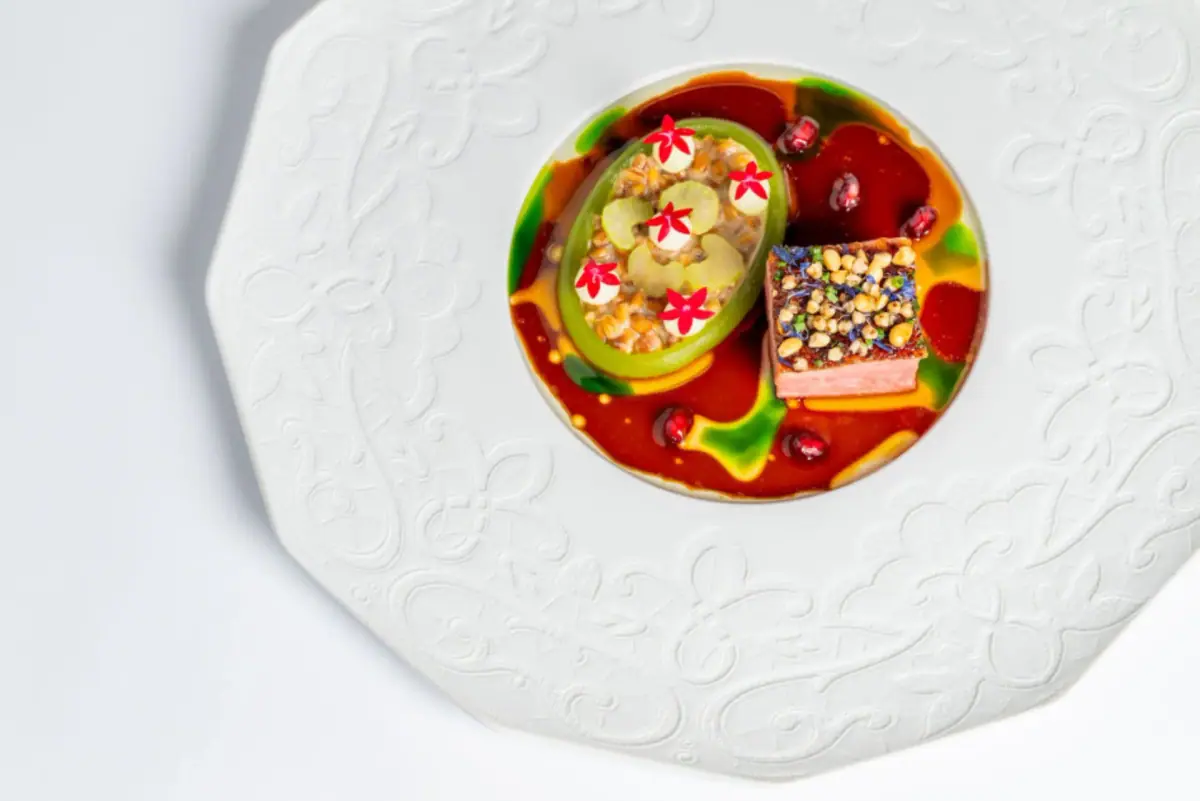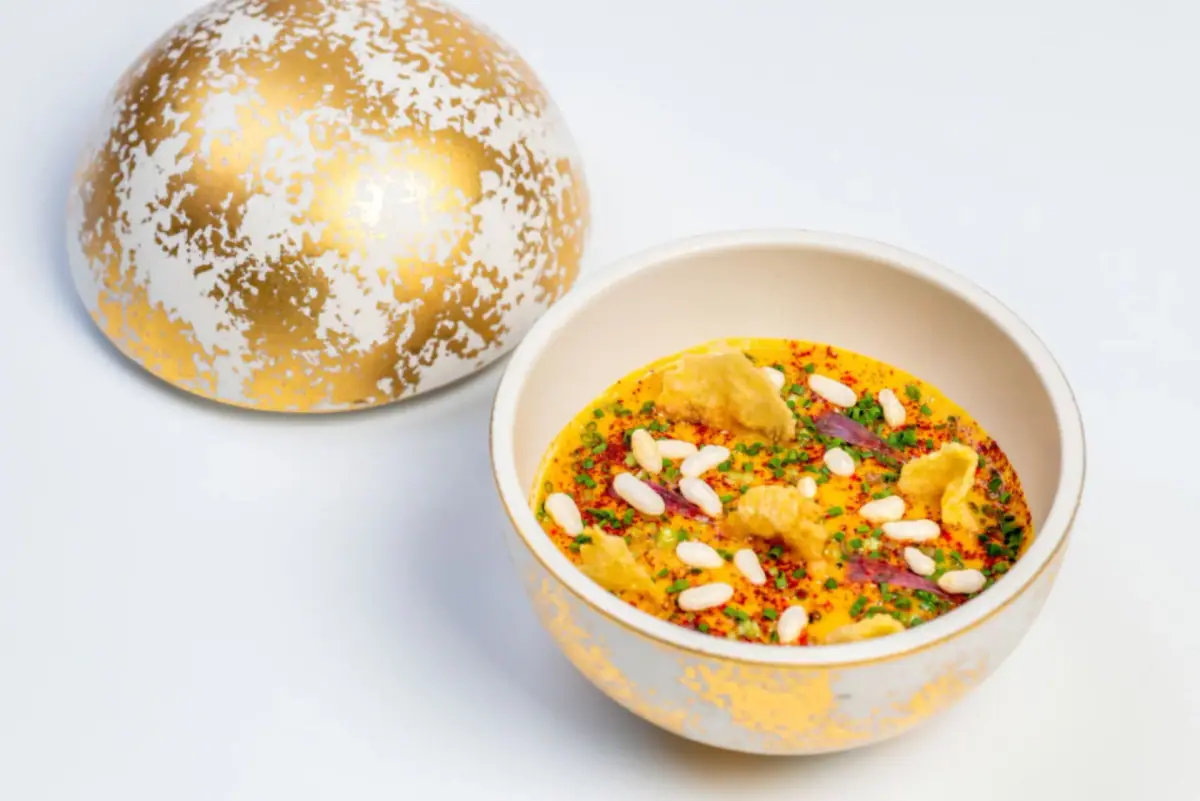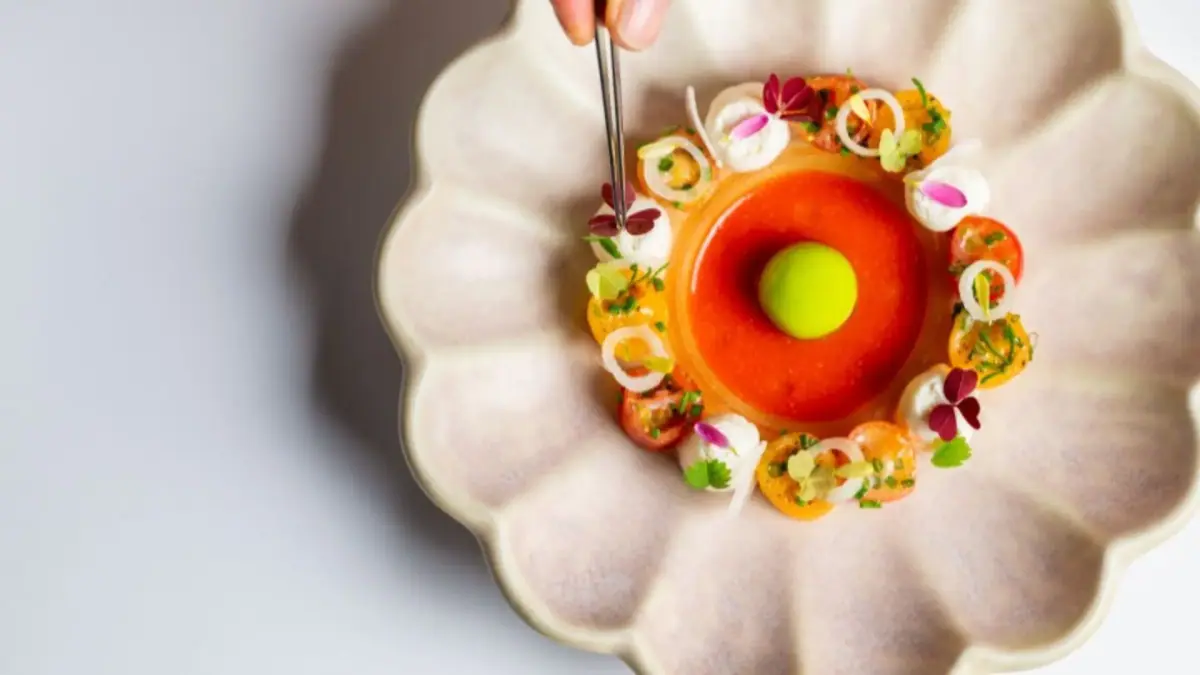
It is exactly sixteen years since Costes Restaurant won Hungary’s first Michelin star. Since then, generations have grown up on new culinary movements, trends and experiments, but one thing has not changed: the timeless value of classic fine dining.
Over the past fifteen years, gastronomy has undergone a spectacular transformation. One movement followed another, each redefining what a fine dining experience means, yet all of them in some way returned to the same foundation: refined technique, quality and a unique guest experience.
Trends that shaped the world of fine dining
In the early 2000s, molecular gastronomy revolutionised fine dining. Chefs such as Ferran Adrià at El Bulli and Heston Blumenthal at The Fat Duck approached food with scientific precision, creating new textures and overall effects. Foams, gels, spherification and deconstructed dishes appeared, bringing not only a new look but a new dimension of flavours and textures.
International trends found an echo in Hungary too. Pioneering Hungarian fine dining restaurants such as Onyx, Babel and Costes Restaurant also began experimenting with new technologies and approaches, subtly combining them with classic foundations. This movement showed that fine dining can be playful, experimental and intellectual all at once: the experience of eating is exciting not only for the palate but for the eye and the mind as well.
In parallel, and then afterwards, the “farm-to-table” philosophy gained ground, emphasising the importance of local ingredients, seasonality and direct links with producers.
This approach put naturalness and transparency first, and around the world it put restaurants’ thinking about sourcing ingredients on a new footing.
Later, the New Nordic movement built on this, shaped by René Redzepi and Claus Meyer among others, above all through Noma. Although it is also rooted in locality, New Nordic goes further: it creates its own Nordic identity, relying heavily on foraged ingredients, fermentation and direct inspiration from nature.
The minimalism on the plate is not merely an aesthetic choice but also a philosophical statement. The deconstructed plate appeared, putting simplicity and essence centre stage. Every ingredient has meaning, every flavour is clean and pronounced. Plates became pared back, colours and textures harmonious, and eating became a kind of pure, sensory experience.
The influence became noticeable in Hungary too: restaurants such as Stand and Pajta reinterpret regional cuisine in a contemporary, pared-back form based on local ingredients, often emphasising closeness to nature and seasonality.
The next wave was the renaissance of fermentation and ancient techniques.
In many parts of the world, chefs rediscovered traditional processes – such as pickling, ageing and smoking – to give dishes depth, complexity and character. These techniques not only enrich the flavour but also bring time and a story to the dishes, adding a new dimension to the fine dining experience.
An excellent example of this movement is the work of Yoshihiro Narisawa at his restaurant Narisawa, where traditional Japanese techniques and avant-garde culinary technology meet in fine balance. In his dishes, respect for nature, time and the process of transformation are just as important as the flavour itself.
The reinterpretation of fermentation and traditional preserving methods has also made a strong appearance in Hungary: restaurants such as Salt Budapest deliberately build on the ancient techniques of the Carpathian Basin. Fermented vegetables, home-made vinegars, garums and various ageing processes not only complement but often define the character of the dishes, building a bridge between past and present.
Meanwhile, fusion cuisine moved to a new level: it was no longer simply about mixing different national cuisines but about a subtle cultural and technological dialogue. Chefs such as Massimo Bottura at Osteria Francescana combined local Italian traditions with modern international influences, with a story unfolding on every plate. Here, fusion no longer relied on sensationalism but appeared as a harmonious unity of complex flavours, deliberate textures and visual experience.
What remains beyond the trends?
Although these movements took gastronomy in different directions – one towards science, another towards nature, a third towards time and tradition – they certainly have one thing in common: they all build on the foundations of fine dining. Precision, respect for ingredients, technical know-how and commitment to the guest experience have remained a constant and strong foundation in every era.
The fact that a trend fades into the background over time does not mean it becomes outdated. Rather, it becomes part of the shared language of gastronomy. Molecular techniques are no longer showpieces for their own sake but tools; fermentation is not a special attraction but a natural way of thinking in the kitchen; and locality has become a basic principle. Fine dining is constantly building up in layers: each new wave adds something and then becomes an organic part of the next era.
As Alain Ducasse’s philosophy neatly sums it up: the evolution of cuisine is not about replacing the past, but about constantly reinterpreting it. The truly timeless values – flavour, a sense of proportion and respect for ingredients – do not change; only the way they are expressed evolves.
A fixed point at home in the changing world of fine dining
From the very beginning, Costes Restaurant has been a defining player in the development of Hungarian fine dining. Through its approach and international openness, it has continuously helped to shape Hungarian gastronomy. It has sensitively integrated the world’s most exciting movements while consistently representing the values of classic fine dining: precision, respect for ingredients and a refined guest experience. On 16 March 2010 the restaurant made history: it became the first to be awarded a Michelin star in Hungary and in the region, opening a new era in Hungarian gastronomy.
Source: Turizmus Online