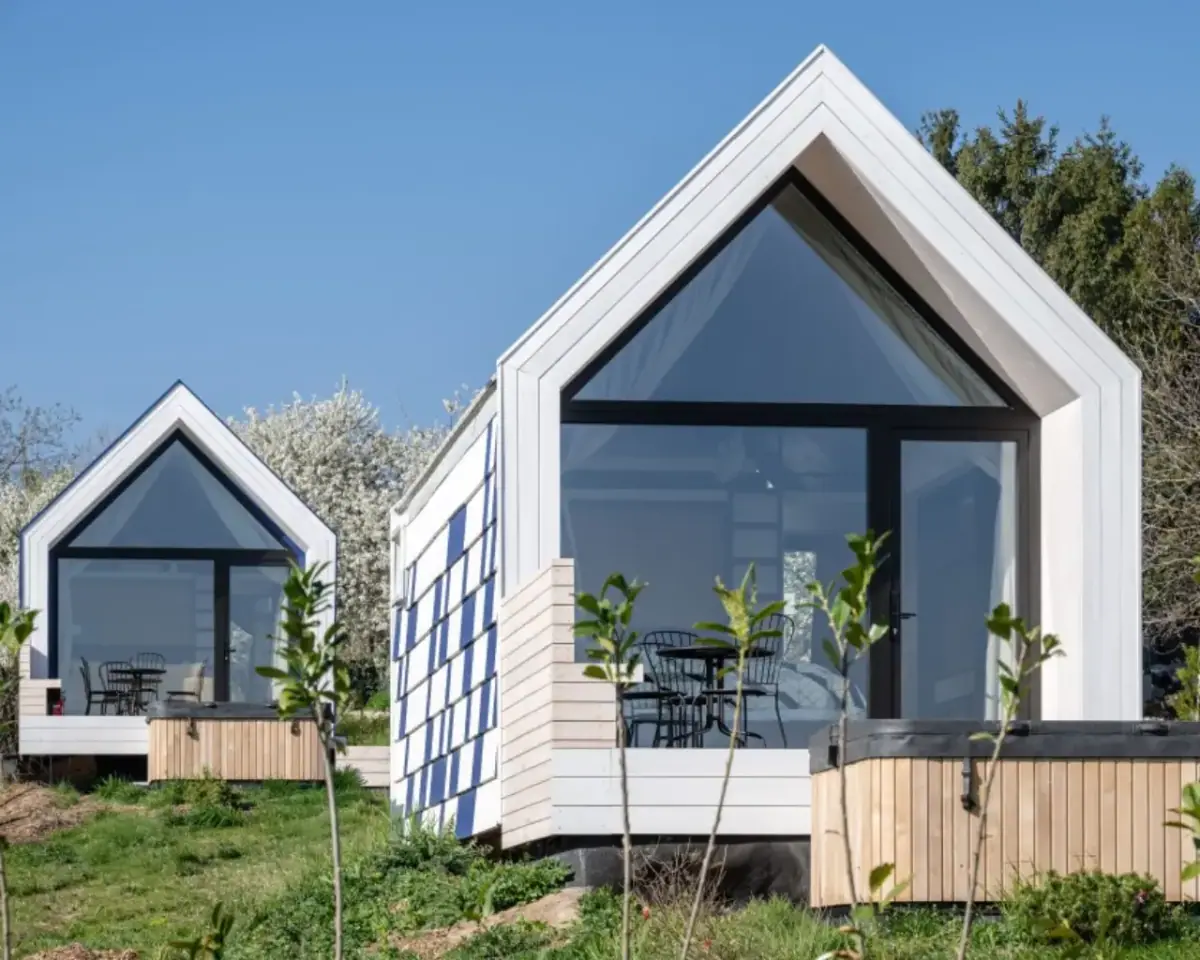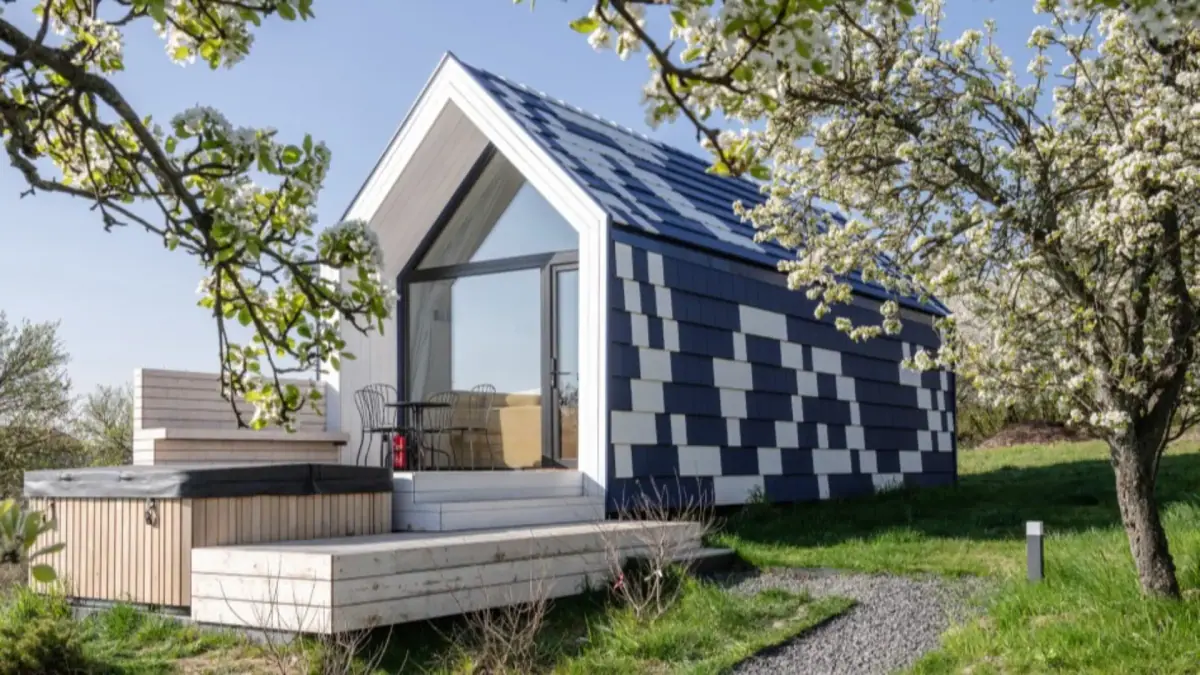
Among the slopes of Etyek's Öreghegy, in a world of vine rows and press houses, the two cabins of Etyekikék make a striking architectural gesture. Hello Wood's latest project reflects both local traditions and a contemporary design approach: the houses' iconic blue-and-white tile cladding stands out in the landscape from afar as a distinctive visual marker.
One of the project's most exciting architectural decisions is that the tile cladding typical of the area was not merely used but brought to the fore as a conceptual element. The pattern covering the entire facade works as analogue pixel art, revealing its layers of cultural meaning up close. The tulip and grape motifs evoke Etyek's Swabian and Hungarian heritage, linking past and present.
The two buildings act as visual counterpoints to each other: the same pattern system appears with reversed colours, as if they were each other's negatives.
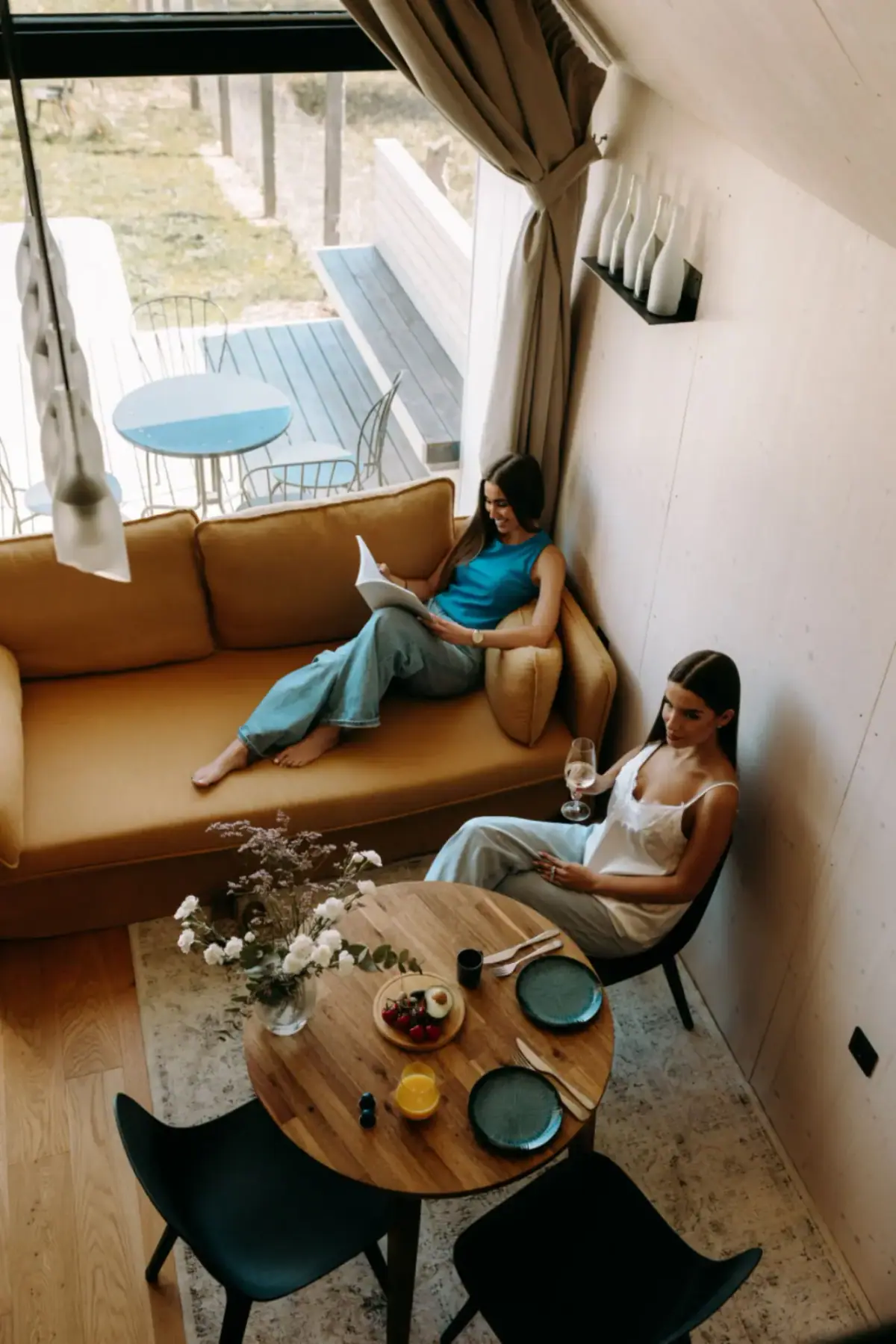
This thinking continues in the interiors, where the natural materiality of the exposed CLT timber structure is complemented by handcrafted details and one-off objects. Special features of the interior are the light fittings made from reimagined wine bottles, which both evoke the atmosphere of cellar culture and work as contemporary design objects.
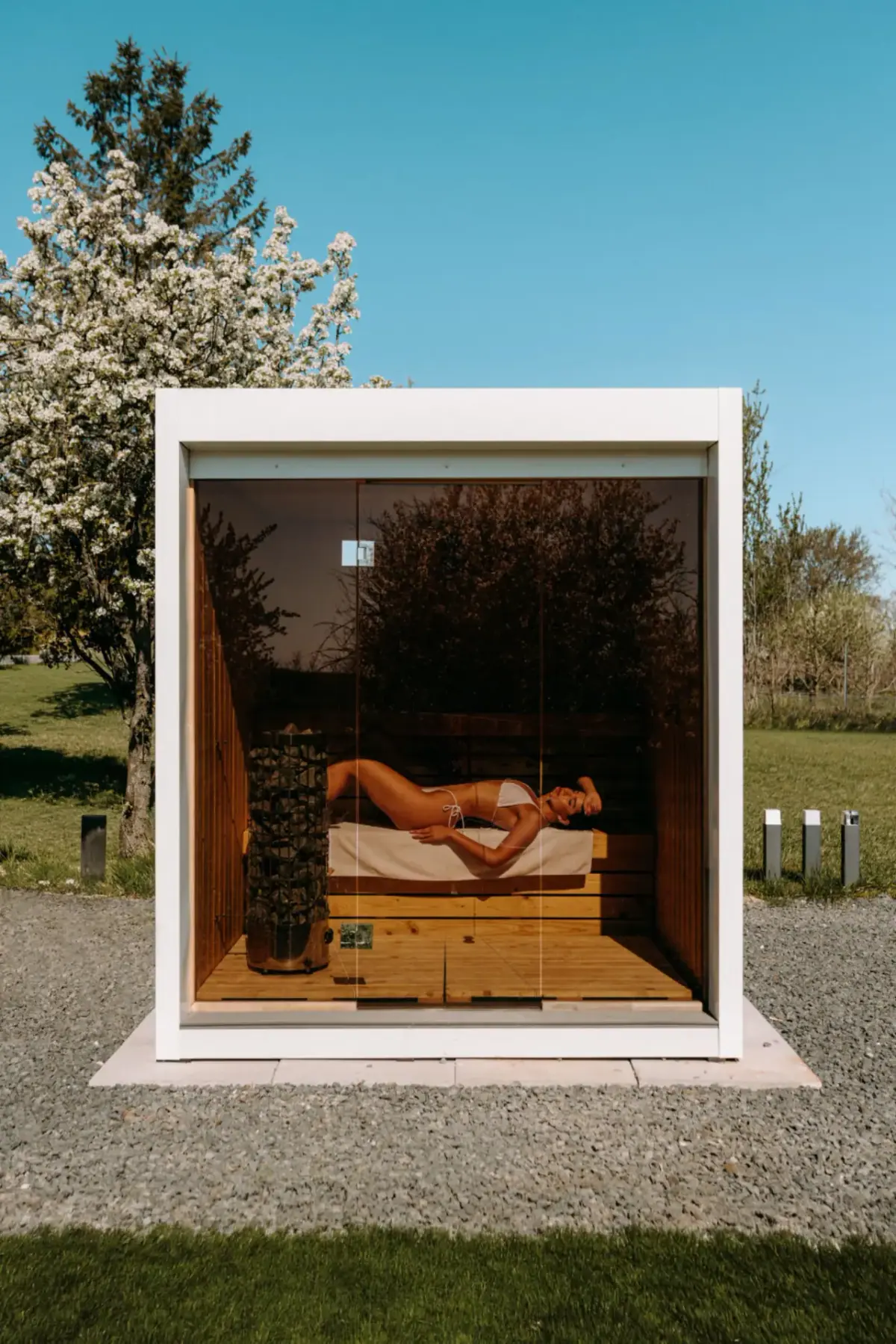
Etyekikék is not simply a place to stay, but the architectural imprint of a slower-paced way of life connected to the landscape. The cabins have been offset from each other to suit the narrow plot, so both terraces open onto uninterrupted views of the vineyards. Thanks to the east-facing orientation, the morning light is almost an integral part of the atmosphere of the interiors.
The scale of the project is deliberately modest: the 20 and 26 square-metre cabins are developed versions of the Hello Wood Kabinka, combining contemporary minimalism with sensitive respect for the rural setting. And the plot surrounded by fruit trees is not merely a backdrop — through the fruit processed on site, the practical and cultural value of the landscape lives on.
Perhaps Etyekikék's greatest strength lies in the way it uses architecture as a vehicle for identity. It does not try to stand out loudly from the wine region; instead, it tells the story of the spirit of the place in a contemporary language, showing how tradition can be reinterpreted in a fresh, visually powerful and yet sensitive way.
Source: Turizmus Online