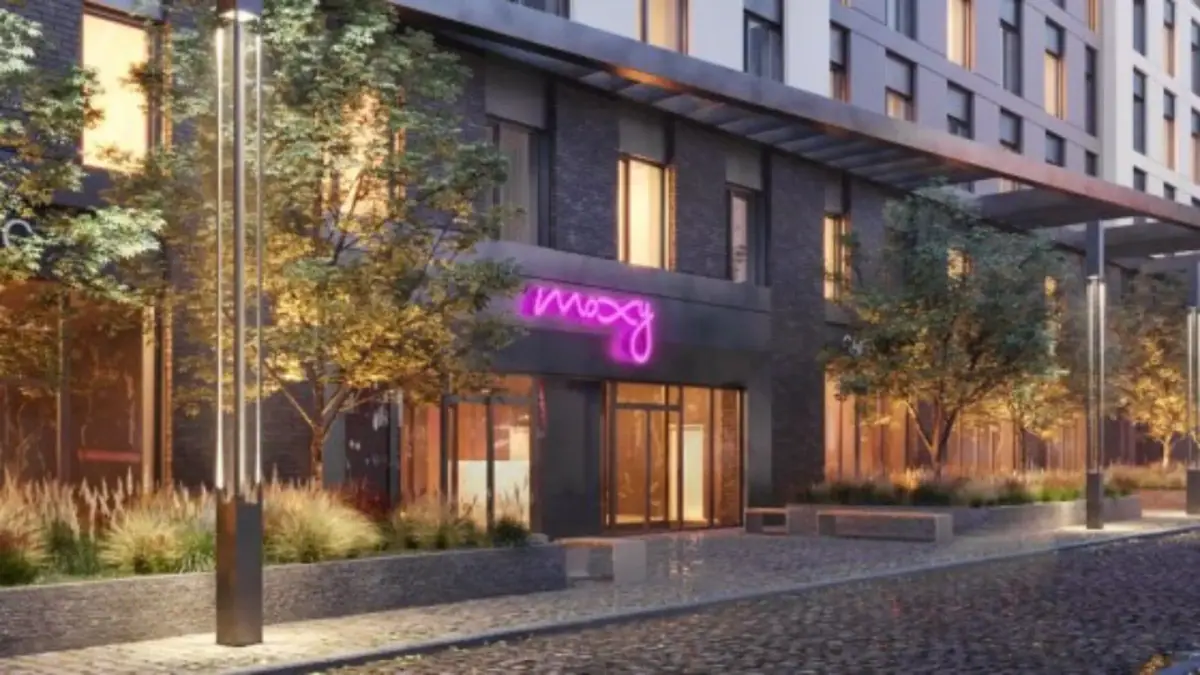
On one of Budapest’s liveliest streets, in the world of ruin bars, galleries, street art walls and late-night parties, a new hotel has opened – and not just any hotel. Moxy Hotels, one of the most exciting brands in Marriott International’s lifestyle portfolio, has officially arrived in Hungary.
Moxy Budapest Downtown opened its doors with a spectacular grand opening event on 14 May. It aims to be not only a new hotel but also a new meeting point for city residents.
The 281-room hotel is located on Kazinczy utca, right in the heart of Budapest’s historic Jewish Quarter and tourist centre, where the city’s creative energy is present around the clock. Besides the arrival of the brand, what makes the project special is that it is the largest hotel investment under a single brand in Hungary since the fall of communism.
Where ballet sits happily alongside street art
A dance school once operated (among other things) on the site of Moxy Budapest Downtown – and rather than erasing this past, the hotel chose to reinterpret it. The interiors, conceived by the Austrian firm BWM Designers & Architects, evoke at once the lightness of movement, the free-spirited character of Queen Elisabeth – after whom Erzsébetváros, the district that is home to the building, is named – and Budapest’s raw urban energy.
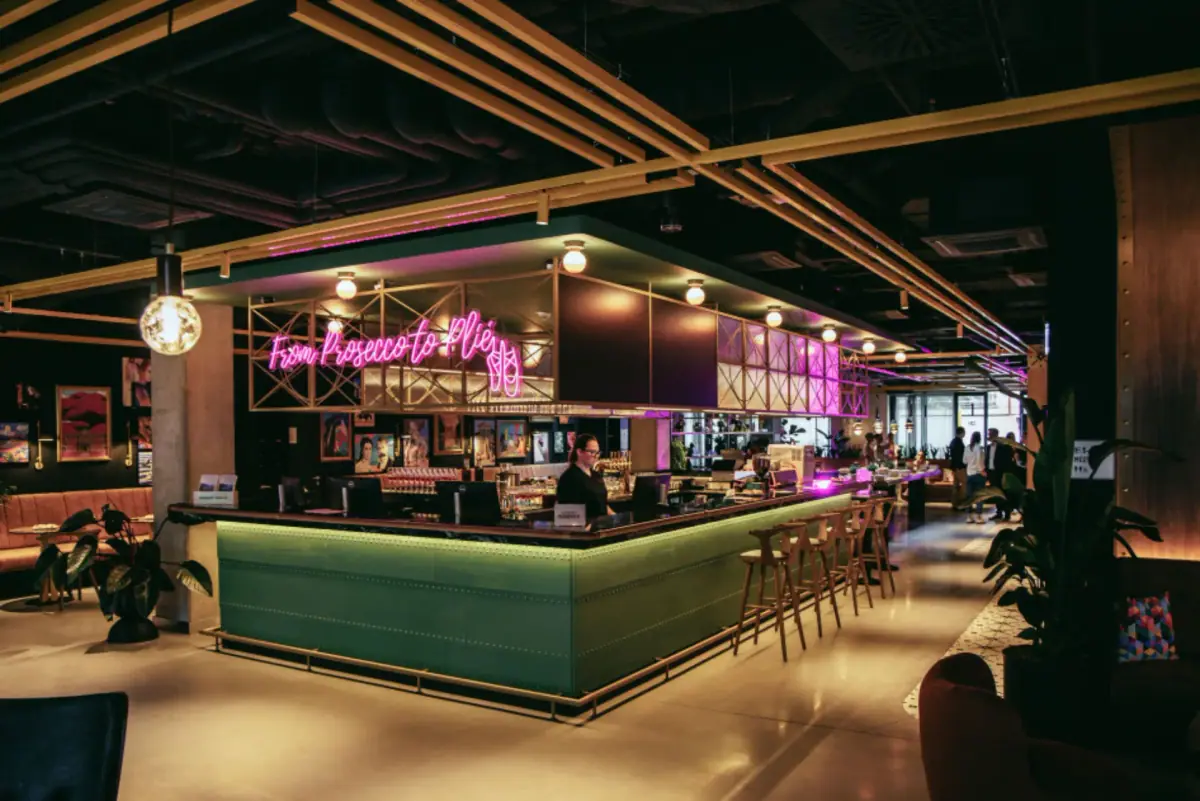
As soon as you enter the lobby, it becomes clear that this is far from the usual hotel welcome. Check-in takes place at the Bar Moxy counter, a welcome cocktail is placed straight into arriving guests’ hands, and meanwhile the centrepiece of the space, a monumental graffiti work by Hidvégi Áron, dominates the view.
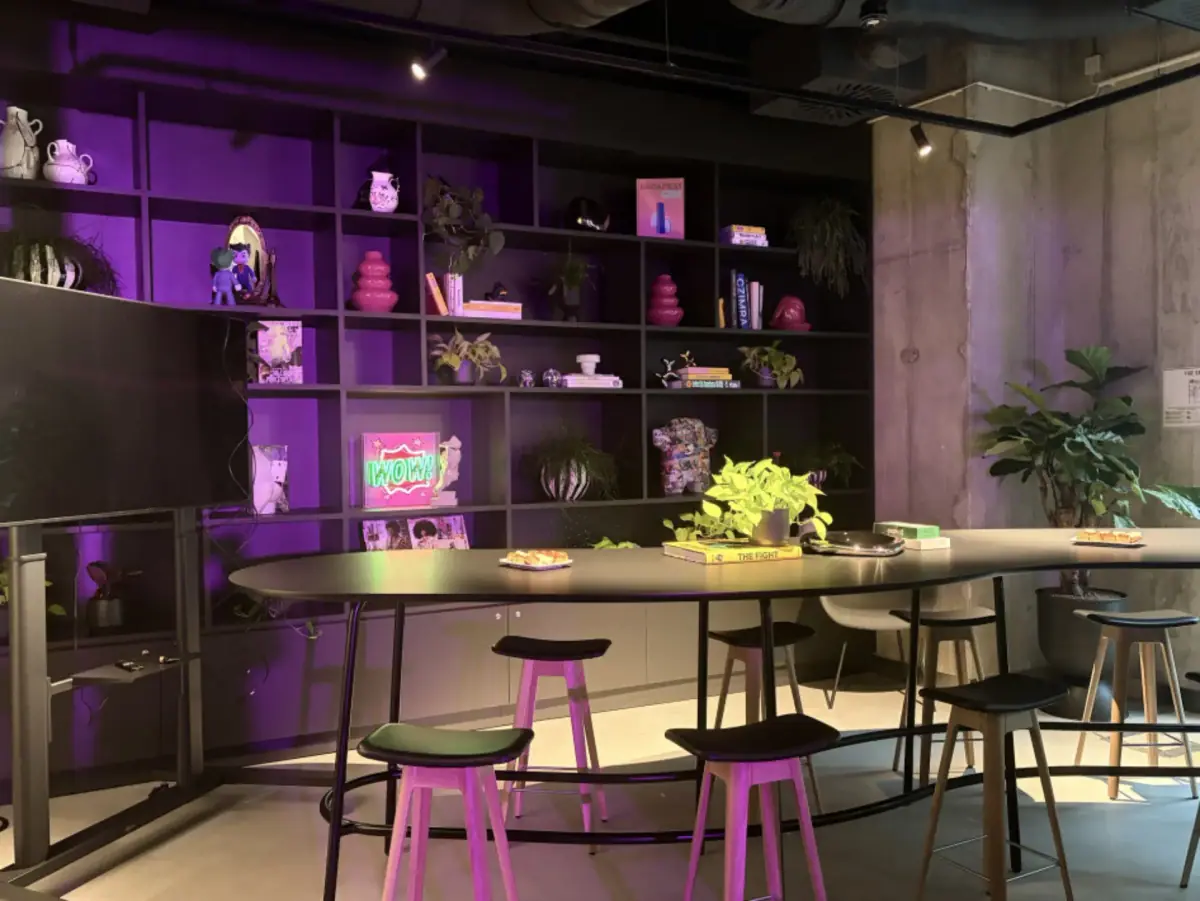
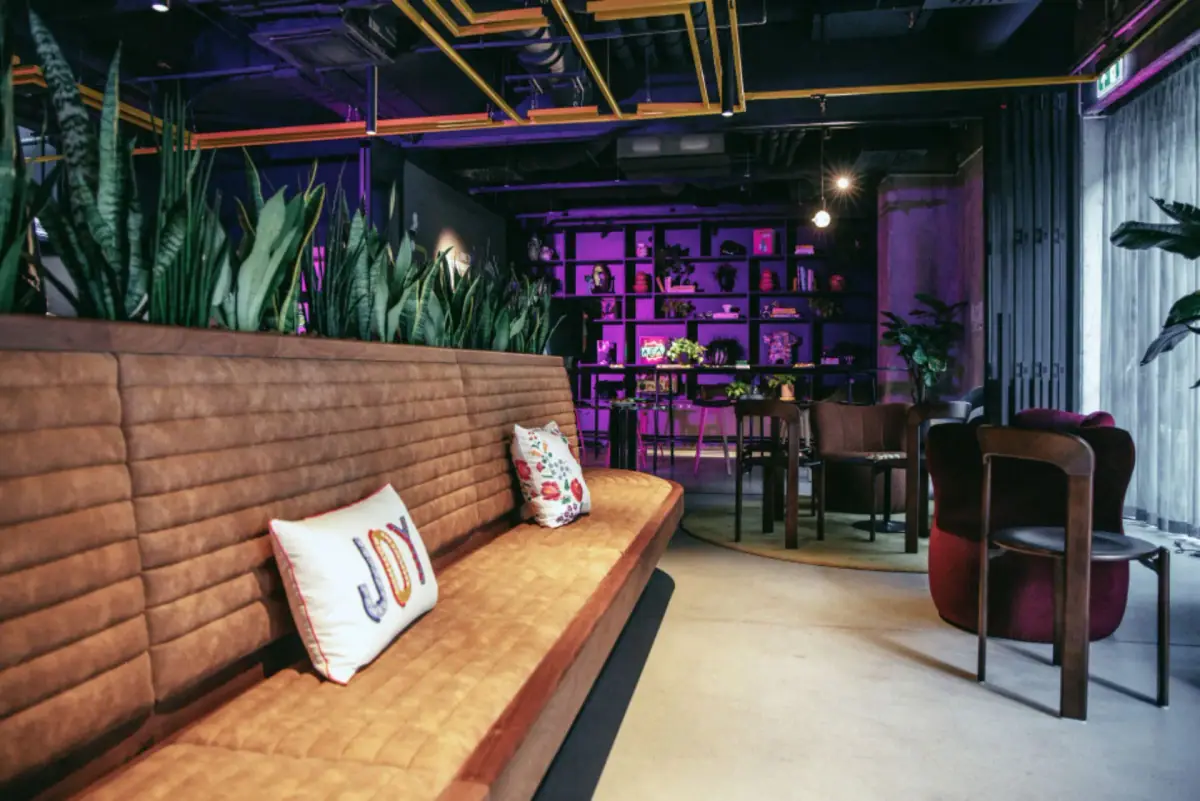
The interior design is full of playful references: the yellow lines on the ceiling recall the Millennium Underground, which also runs beneath the building; Parisian ballet shoes appear as an installation in the lobby; and the communal spaces combine the easy-going feel of Budapest’s ruin bars with the exciting sophistication of an international lifestyle hotel.
According to Moxy’s philosophy, a hotel is not merely a place to stay but at once a community space, a creative playground and an urban living room. Guests can work, meet, have breakfast or enjoy cocktails anywhere – the emphasis is on experience and connection rather than on the usual hotel trappings.
A rooftop bar with a “wow” factor and a green urban oasis
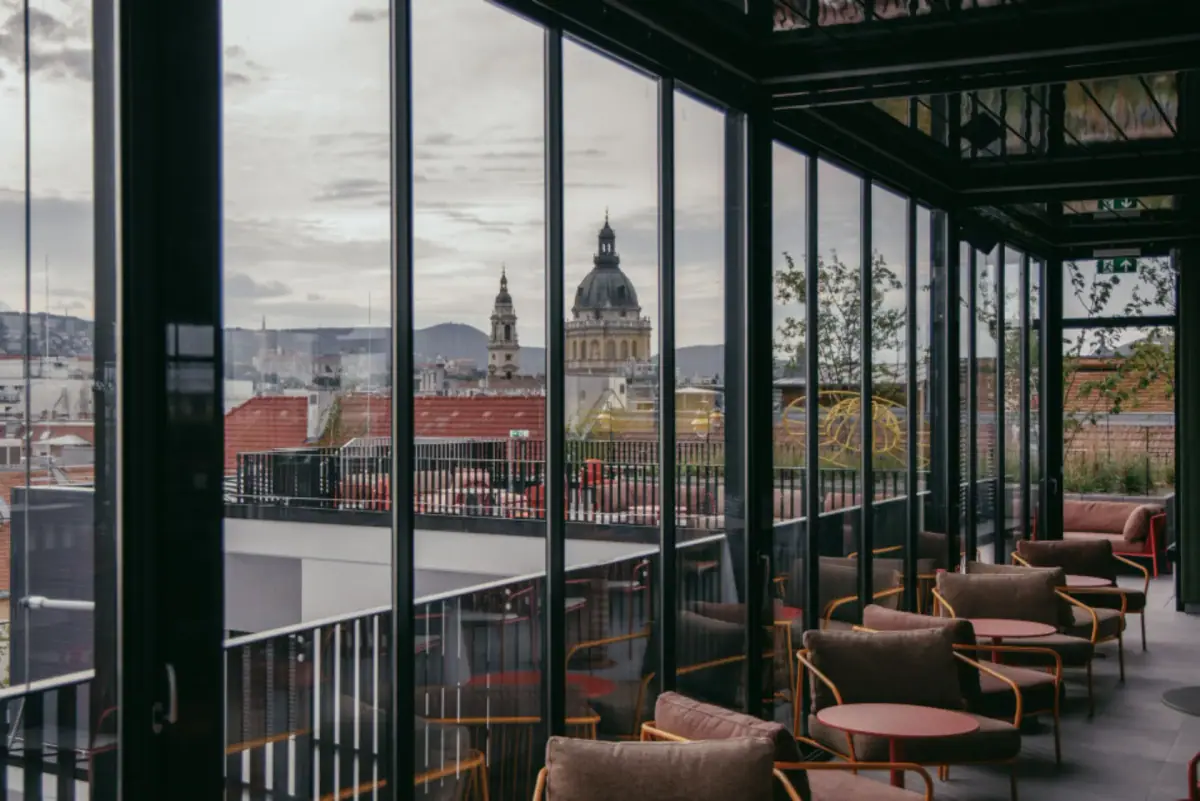
One of the hotel’s most spectacular spots is undoubtedly the Saddle & Sky rooftop cocktail bar, inspired by Sisi’s passion for horse riding. The roof terrace lifts the Moxy lifestyle above Budapest: panoramic views, cocktails and a buzzing city atmosphere come together high above the streets.
The hotel development also stands out in terms of sustainability. The project has achieved a BREEAM Excellent rating, as the building runs on energy-efficient systems and solar panels, and the basement car park has more than 80 electric vehicle chargers.
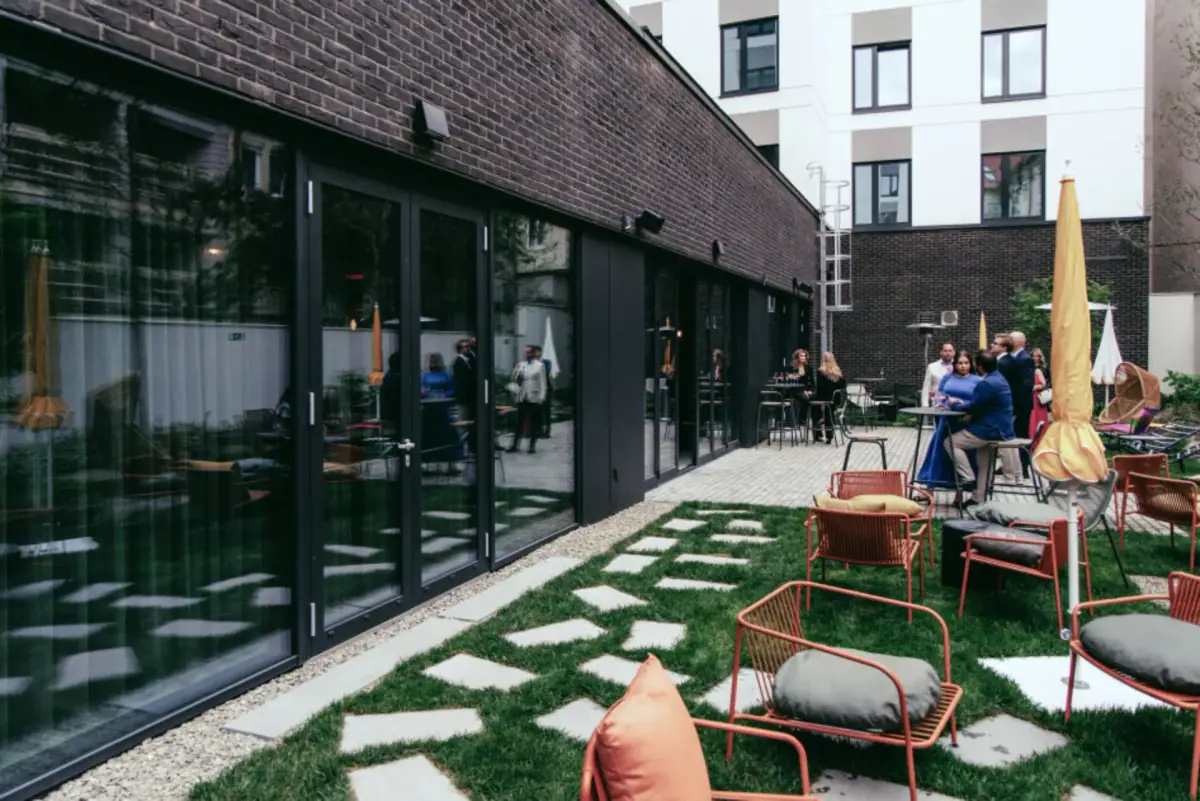
During the project, 81 large trees and more than 10,000 perennials and shrubs were planted, while part of Kazinczy utca and the surrounding walkways were also renewed. The developers’ aim was clear: not merely to build a hotel, but also to create a more liveable urban environment around it.
“Moxy has always suited Budapest” – Botos Bálint on the vision
One of the personal moments of the grand opening was the speech by Botos Bálint, founder of Forestay Group, who spoke of the project not only as an investment but as a dream of many years.
“This is a milestone not only for Forestay Group but also for Budapest,” he said. He stressed that the 281-room Moxy Budapest Downtown is the largest hotel building in Hungary delivered under a single brand since the fall of communism.
According to the developer, the project was driven by a clear and simple realisation: tourism in Budapest has changed radically in recent years. While the number of international guest nights has almost doubled, the city lacked a lifestyle hotel built primarily around younger travellers looking for shared, social experiences.
“Moxy’s DNA and Budapest’s DNA are surprisingly close,” said Botos Bálint, who believes that the brand’s easy-going nature, openness and urban energy fit the character of the capital almost naturally.
In his speech he emphasised that the project was not just a business investment but also an urban development mission. Greening Kazinczy utca, renewing the walkways and creating new community spaces were as much part of the concept as the hotel itself.
The founder of Forestay Group also spoke proudly of the fact that the company now manages assets worth EUR 200 million, while following the same core principles in every project: quality, innovation and long-term value creation for the city.
“This building was born from ten plots and a great deal of struggle” – Németh Péter offers a glimpse behind the scenes
The speech by co-founder Németh Péter took us through the project’s eight-year history almost like an urban adventure novel.
As he explained, the site of the hotel originally consisted of ten plots with different ownership backgrounds: private property, municipal parts, state-owned land, a ruin bar and a building that was partly in unregulated use.
“A development never begins when the first excavator arrives,” he pointed out. Buying the land alone took four years, while the team had to overcome a whole series of legal, technical and urban planning obstacles.
During the design phase, 25 different concepts were drawn up, they had to go through several rounds of design review, and then a 700-page brand specification from Marriott forced the team to redesign.
Németh Péter made no secret of the most extreme moments of construction either: the “race” against the Danube during a flood, the underground (and working!) lorry unearthed during construction, or how a chimney that had already been completed had to be rebuilt once again.
He illustrated the technical scale of the project with telling figures: the building was completed in 18 months, 12,000 cubic metres of concrete were poured, 2,000 concrete mixer trucks came and went in the area, and 1,200 tonnes of reinforcing steel were used.
He particularly highlighted that the hotel passed Marriott’s extremely strict Fire & Life Safety audit at the first attempt – something only 5 per cent of hotels worldwide manage to achieve first time.
“Moxy is not simply a hotel but a community experience” – Kocsis Mária on the brand’s philosophy
According to Kocsis Mária, Director of Hotel Operations at Forestay Hotel Management, the arrival of Moxy means not only a new hotel in the life of the capital but also the emergence of a new approach.
In her speech she recalled that Marriott launched the Moxy brand in Milan in 2014, and since then it has become one of the group’s fastest-growing lifestyle brands worldwide.
The concept is based on changing travel habits: today’s guests take shorter trips, seek experiences and want to live the city – not spend their time in a hotel room.
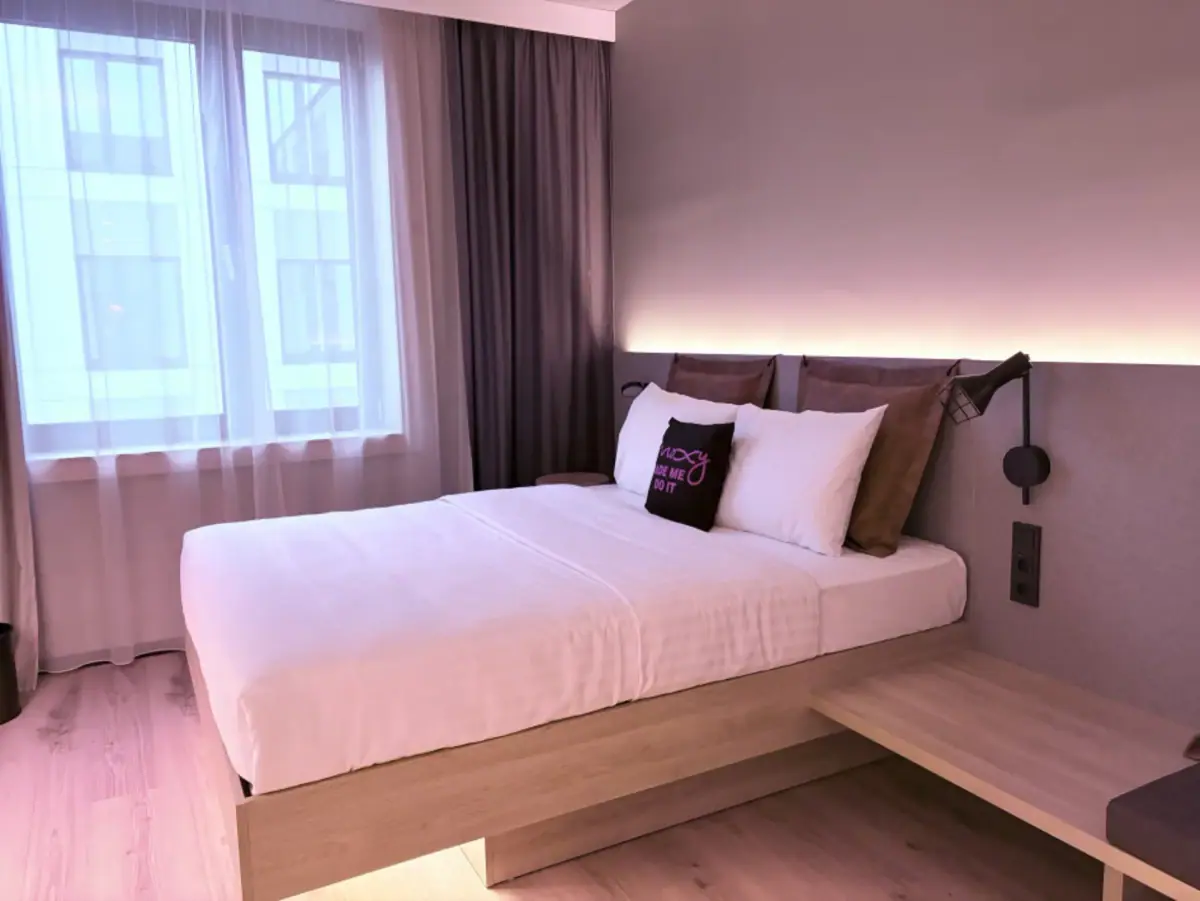
“In the rooms they look for functionality, and in the communal spaces for connections,” she said. That is why Moxy breaks with traditional hotel operations. The communal space becomes the heart of the building, where the city’s culture, energy and social life all come together.
According to the hotel professional, however, what ultimately makes a hotel memorable is not its design but the people who run it.
This was echoed by the hotel’s “captain” (GM), Sófalvy Rita, who stressed that they do not simply have staff but a “crew”, whose job is to bring the house to life.
“A hotel on its own is just a beautiful building. Its real value comes from the people who work here,” she emphasised.
The speeches were followed by a tour of the hotel, during which we concluded that Moxy Budapest Downtown has not simply arrived as a new player on the capital’s hotel scene: it is much more a new urban meeting point, where the hotel experience merges with the exciting street energy of Budapest.
In its very first hours, the hotel already brought the kind of spontaneity the brand is built on: not only guests with advance bookings arrived, but also people who simply walked in off the street because they liked the atmosphere of the place and decided this was where they would happily spend the rest of the night.
Source: Vágó Ágnes, Turizmus Online