With the opening of The St. Regis Budapest, another international luxury brand has appeared on the Hungarian hotel market. The project has not only created new tourism capacity but also represents the reuse of the historic Klotild Palace.
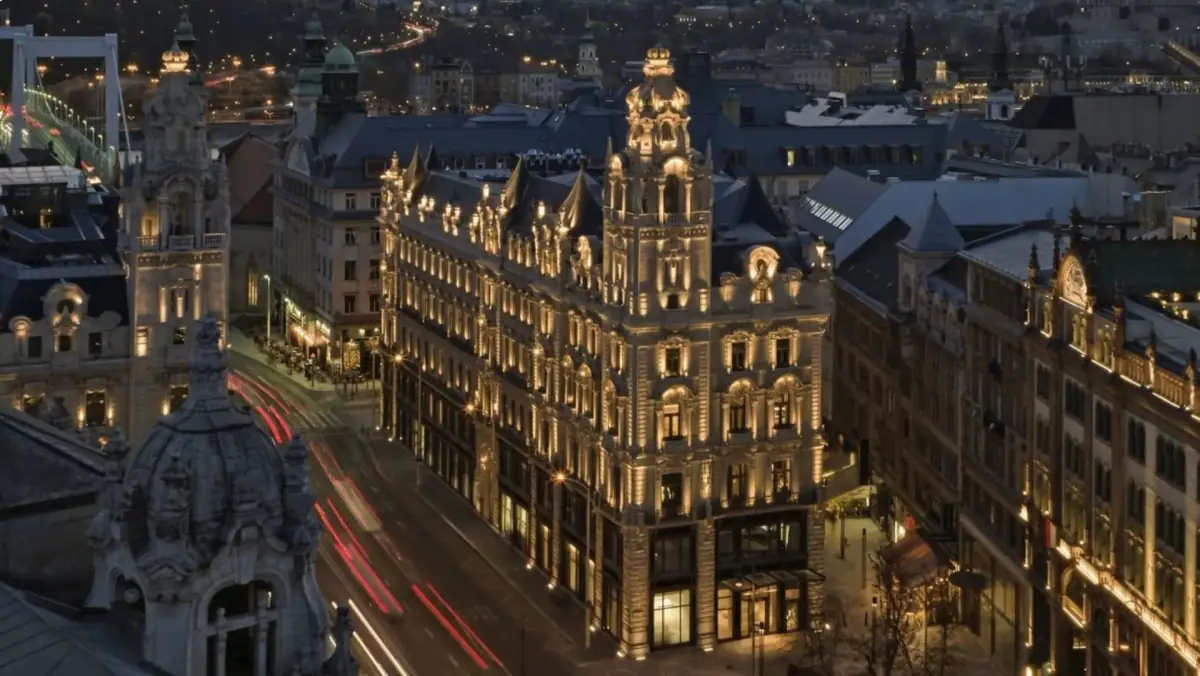
The hotel is housed within the walls of the Klotild Palace, one of the defining buildings of the city centre, at the Pest end of Elisabeth Bridge. The investment fits both the trend of repurposing Budapest’s historic buildings and the rise of international luxury hotel brands.
From historic palace to luxury hotel
The Klotild Palace was built in the early 20th century, in the golden age of the Austro-Hungarian Monarchy, to designs by Korb Flóris and Giergl Kálmán, commissioned by Princess Clotilde of Saxe-Coburg and Gotha. For a long time, the twin palace was a defining element of Budapest’s cityscape.
A distinctive feature of the neo-Baroque building is its 48-metre tower, topped by an enlarged replica of the crown of Archduke Joseph Karl. During the renovation, the hotel functions were created while preserving the exterior and several original architectural details. Before the St. Regis, the Klotild Palace was home to the Buddha-Bar Hotel, which closed in early 2019 after its then Italian owners sold the building to a Qatari businessman.
The opera and the Danube feature in the design
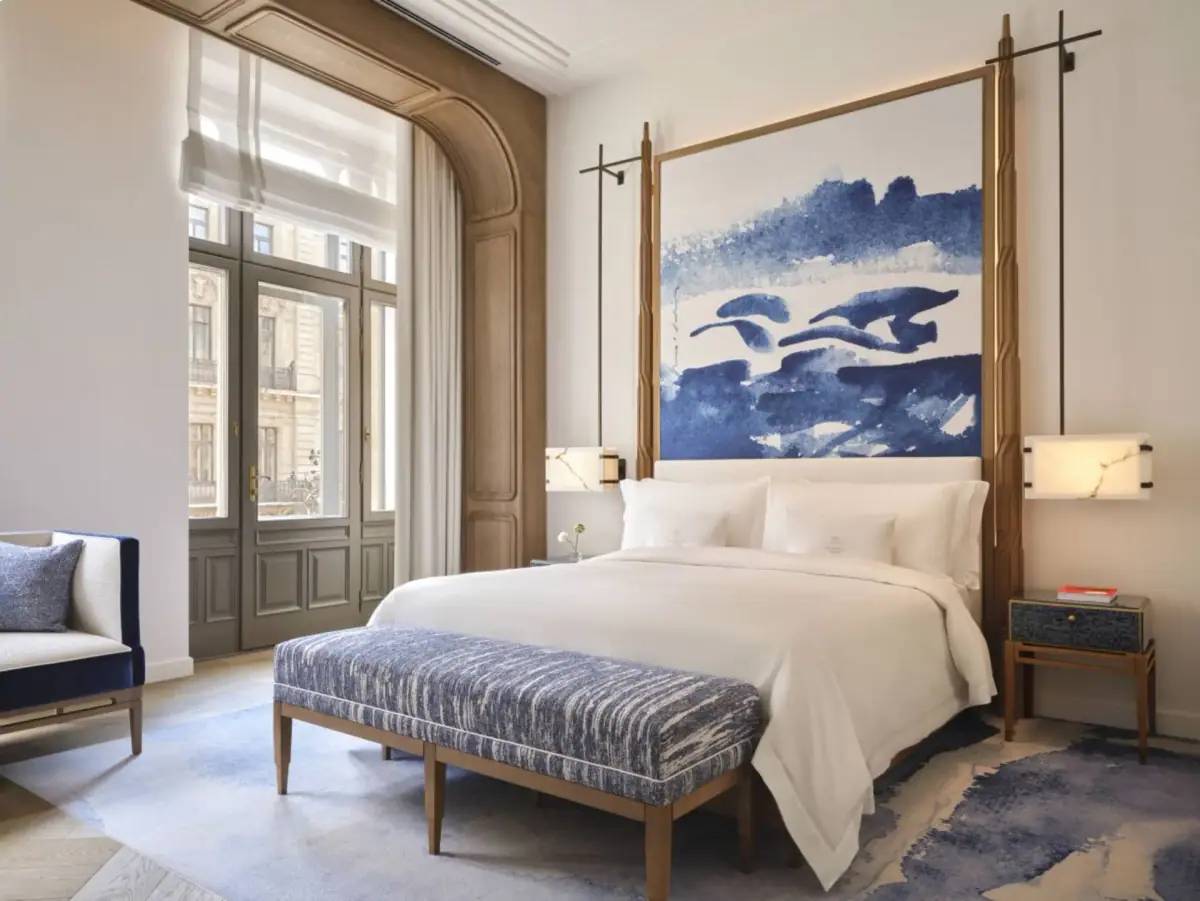
The St. Regis Budapest has a total of 63 rooms and 39 suites. Even the entry-level, i.e. smallest, rooms start at 35 square metres. The offering includes the Klotild Tower Suite and a 169-square-metre, two-bedroom Presidential Suite whose balcony offers direct views of the Danube, Elisabeth Bridge and the Citadella.
Several motifs linked to Budapest and Hungarian culture appear in the interiors, and the Qatari owner’s passion for opera is also reflected in the design. The wooden arch around the room windows, for example, creates the impression of looking out over the city and the street from an opera box. The stylish mouldings, subtle fabrics and delicate brass-trimmed bedside tables evoke the Art Nouveau era, while the design as a whole is contemporary.
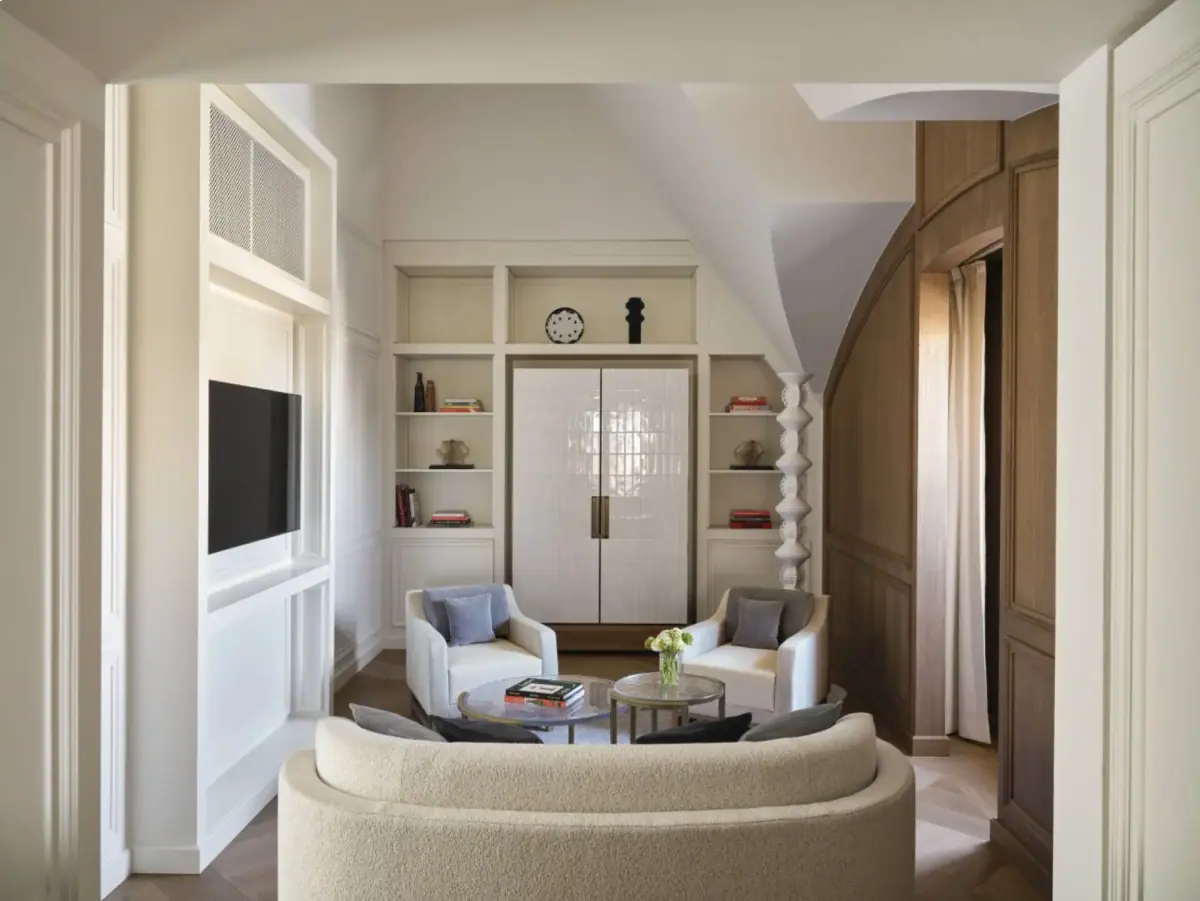
Another striking element of the room furnishings is a piece of furniture that looks deceptively like a traditional Hungarian tiled stove but in fact conceals the minibar and refreshment corner. The Danube motif recurs throughout the colours and shapes of the public areas, through soft blue tones, wave patterns and shimmering surfaces.
The hotel offers guests the brand’s signature, personalised St. Regis Butler service.
From a sushi bar to sabrage, with a rooftop gym
The hotel has several food and beverage outlets, each with a different concept.
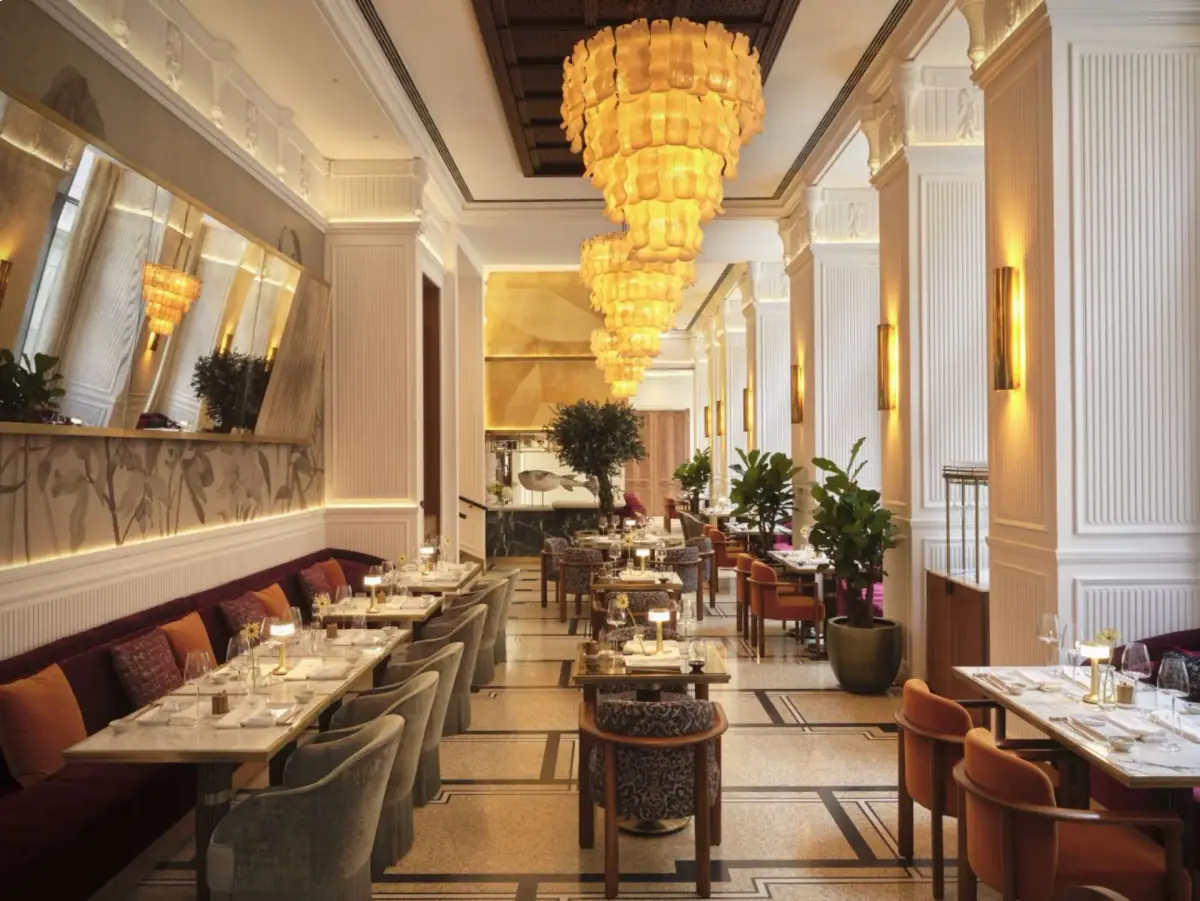
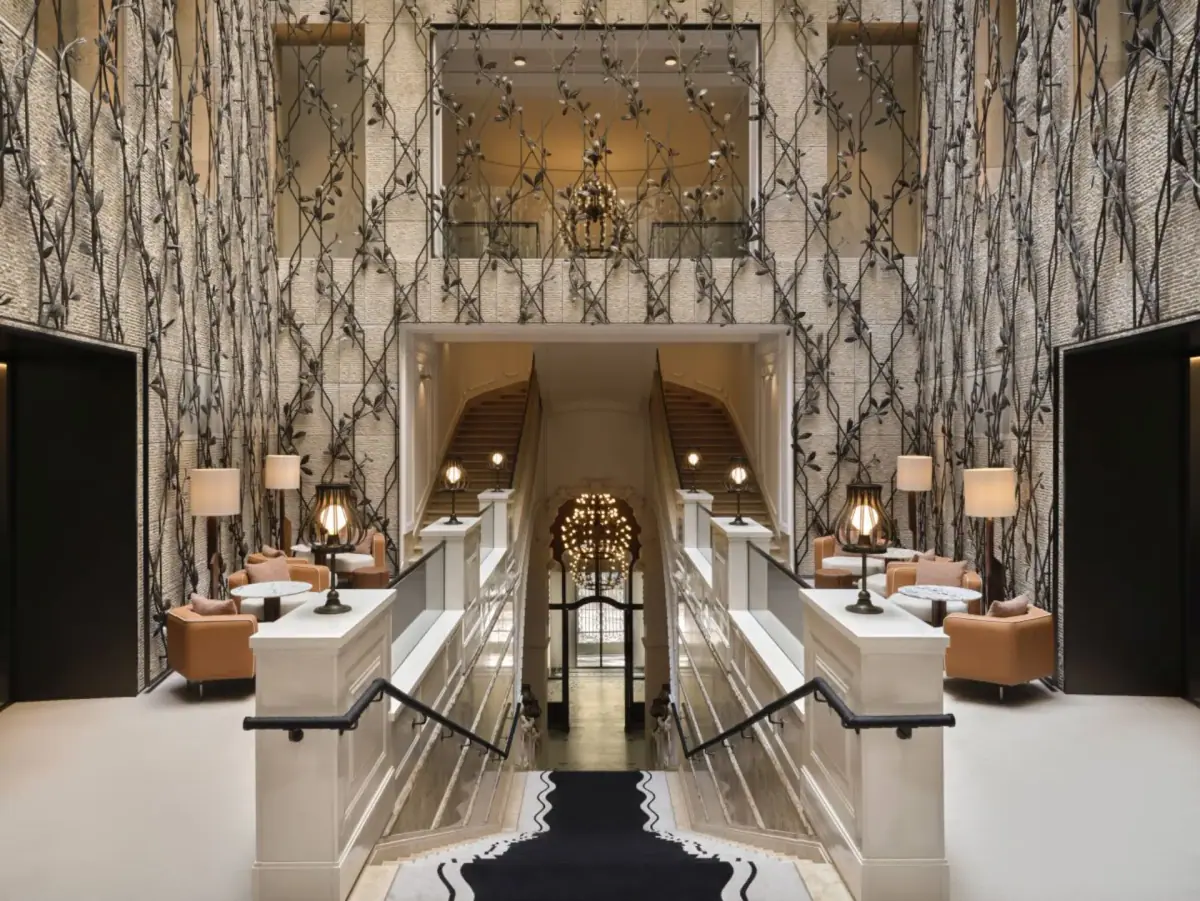
The grand staircase at the entrance was conceived as a kind of “vertical river of light” – the effect is completed by sculptural ceramics, reflective surfaces and a glass ceiling, adorned with bronze floral patterns and chandeliers inspired by the Saxe-Coburg and Gotha crown.
Budapest’s literary coffee-house culture inspired the Passage gallery, created from the former carriage entrance; with its suspended mirrors and vaulted ceiling, it is also suitable for hosting cultural gatherings and art events.
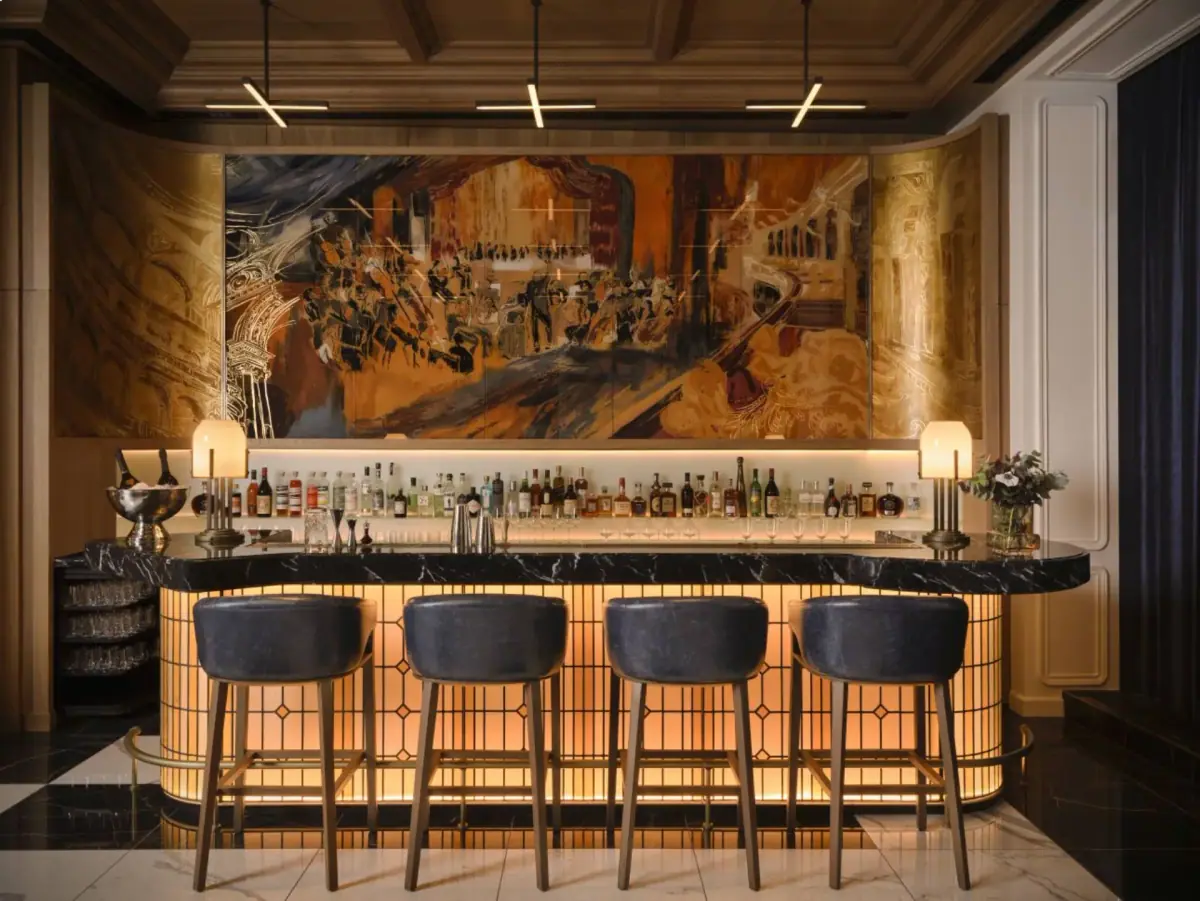
The spectacular counter of the theatrically laid-out St. Regis Bar is framed by a huge glass mural depicting the orchestra of the Hungarian State Opera. The bar is intended as a space for evening social life, with live music and cocktails. Here you can taste the hotel’s own take on the Bloody Mary, The Crown Mary, which pays tribute to the 1934 New York original (then called the Red Snapper). The drinks list was created by head mixologist Rezván Norbert.
99 Sushi Bar & Restaurant combines traditional Japanese techniques and modern presentation with premium ingredients. The restaurant welcomes guests with a show kitchen and a private room, where they can enjoy a seasonal omakase experience created by chef Thinus van der Westhuizen, culinary director of the Ninety-Nine group.
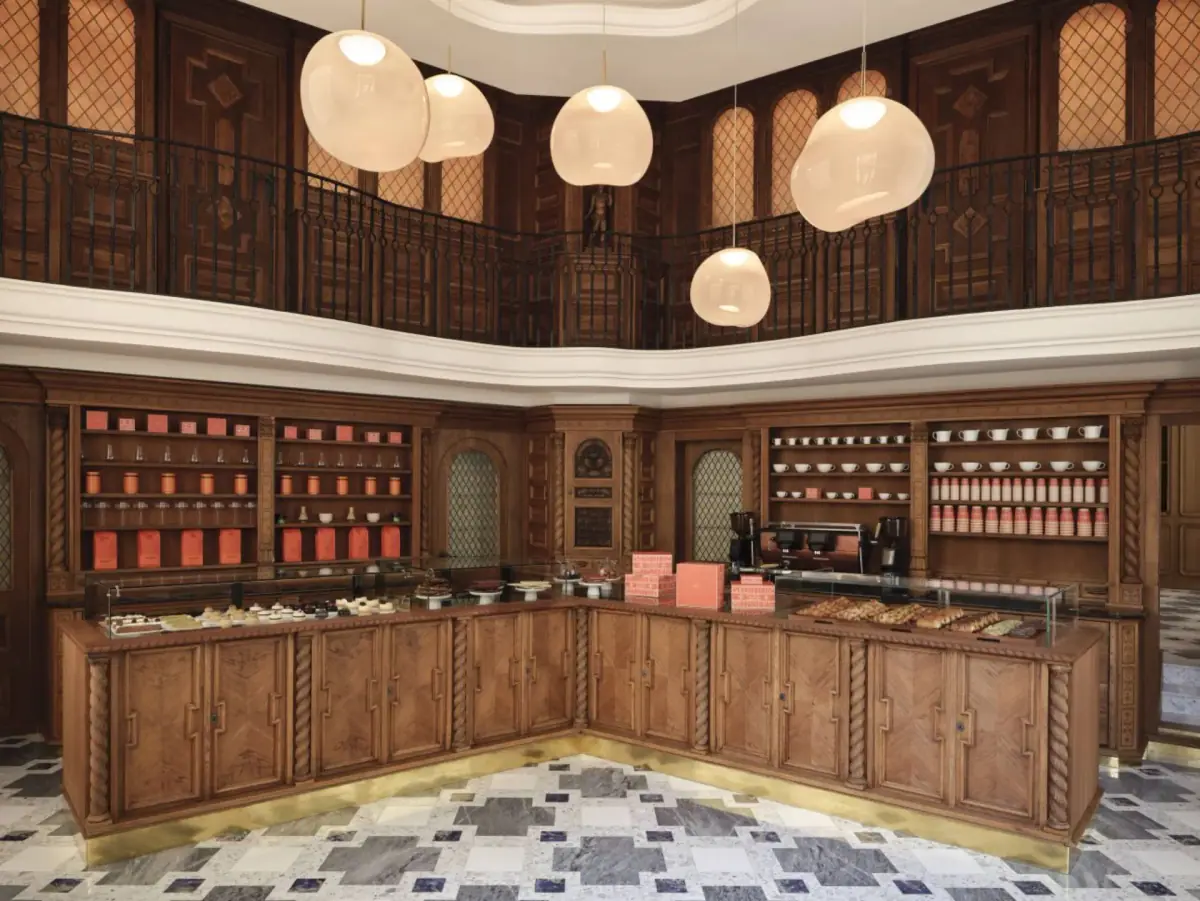
The Klotild Patisserie, which can also be entered directly from the street, occupies the site of a historic pharmacy – the original furnishings have been preserved, giving the patisserie a charm all of its own. It offers Hungarian and Austro-French pastries, ice cream and artisan coffee, including a limited-edition blend.
In the space called the Atrium, guests can enjoy St. Regis brand experiences such as afternoon tea or the spectacular sabrage – the ceremonial opening of a bottle of champagne with a blade.
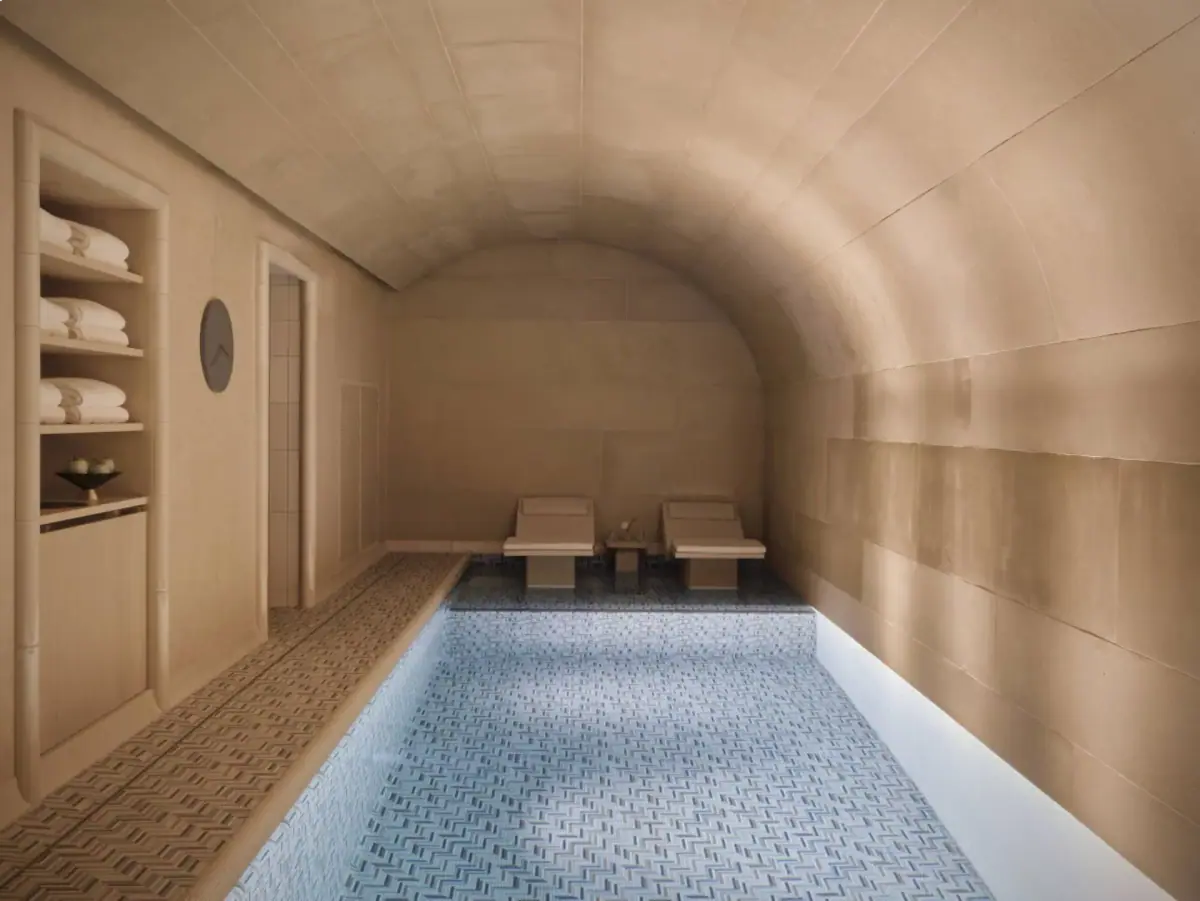
The hotel’s wellness area features an indoor pool, a hammam, a Finnish sauna, experience showers and treatment rooms. The spa works with partners such as Sothys and the local luxury brand Omorovicza, whose products are based on Budapest’s thermal waters. The glass-roofed fitness room, equipped with top-of-the-range machines, is on the sixth floor.
The hotel also offers elegant event venues, including a boardroom, three smaller salons and the grand Caroline Salon.
A new player on the Budapest luxury hotel market
St. Regis Hotels & Resorts operates more than 65 hotels and resorts worldwide and is part of the Marriott International portfolio. The brand’s history began at the dawn of the 20th century, when the younger John Jacob Astor opened The St. Regis Hotel in New York. With the opening of The St. Regis Budapest, the brand is further strengthening its presence in Europe. The general manager of the Budapest hotel is Lithuanian-born Ausra Lucinskaite.
Source: Fucskó Hajnalka, Turizmus.com
Photos: St. Regis Budapest