
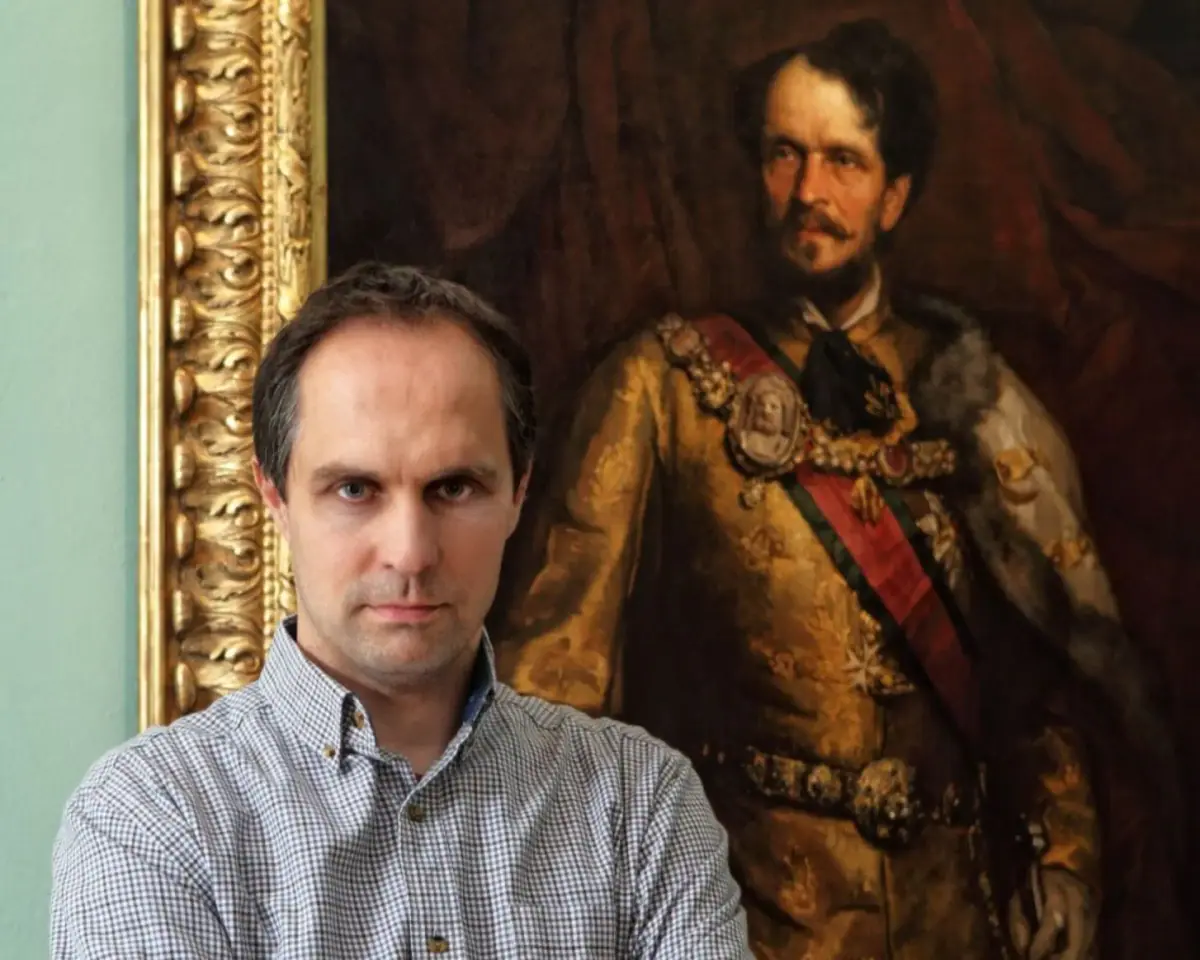
Found Paintings (Megtalált képek), the latest exhibition at the Kieselbach Gallery, invites visitors on a fascinating journey into the world of the hidden treasures of Hungarian art.
The author of the accompanying book of the same title is Péter Molnos, one of the leading experts on Hungarian fine art, who has put the results of twenty years of research down on paper and is now sharing them with the wider public.
The idea for the book is tied to a significant anniversary, Péter Molnos said: “The thought occurred to me when I realised that twenty years had passed since the publication of the second volume of the survey Modern Hungarian Painting (Modern magyar festészet). The number and quality of the important paintings that have recently come to light gave me the final push to start the work.”
The book and the exhibition present paintings that have come to light over the past two decades, having lain hidden in private collections or surfaced on the art market in Hungary and abroad. Péter Molnos examined an astonishing number of reproductions – some 60,000 – to select the best and most interesting works. During his research he contacted collectors, gallery owners and even ordinary traders at the Ecseri flea market to gain a complete overview of the works that have recently resurfaced.
“We have found paintings in bedding boxes, in attics, behind wardrobes and under beds – this treasure hunting, this discovery, brings a real childlike excitement and joy. It is not only the financial value that matters at such moments, but the fact that a message arrives from the distant past, and you are the first to receive it. There were many exciting stories, but perhaps I would single out the Vilmos Perlrott-Csaba painting worth tens of millions of forints that turned up at a Paris auction with a forged József Rippl-Rónai signature. I already considered it Perlrott's work at the time, but this was only confirmed when the work came to Hungary, a restorer removed the forged signature and the original signature, ‘Perlrott Vilmos’, appeared underneath,” the author recounts.
Exciting stories, surprising discoveries
The book brings to life stories that can captivate lay and professional audiences alike. One of the most intriguing cases concerns Csontváry's painting Tennis Party (Teniszező társaság). Two fraudulent art dealers set out to deceive an elderly collector with failing eyesight.
They brought him a painting bearing a forged Gulácsy signature and in exchange took away a painting they believed to be better and more valuable. Years later, however, the “fake” Gulácsy turned out to be a genuine Csontváry worth several hundred million forints; it simply had not been signed. It was on this canvas that the forger had once added the Gulácsy signature.
A new chapter in Hungarian art history
Found Paintings not only enriches the artistic canon but also helps draw attention to previously undervalued periods and masters of Hungarian painting.
“The history of Hungarian painting is full of blank spots, because the upheavals of 20th-century history caused a great many works of art to disappear, go abroad or be destroyed. Comparing old exhibition catalogues with the works that still exist today, it seems that at least half of the works once created have not yet come to light. Tracking down these hidden paintings could transform our whole picture of the history of Hungarian painting,” said the expert author.
The impact of the exhibition and the book
The exhibition and the book make it possible to rediscover painters and works that have not so far received the attention they deserve. The main criteria in selecting the works on show were quality and an exciting historical background: “In most cases, this book also brings to light the story of the paintings and their fate up to the present day. There is a painting by Vilmos Aba-Novák that the artist completed in Rome in 1929, then rolled up the canvas, brought it to Budapest and never exhibited it. It survived the Second World War in a walled-up cavity of the painter's villa, but as the building took a direct bomb hit, the painting was also badly soiled. The composition remained rolled up until the early 2010s and only then went to a restorer, so that visitors can now see it in its original splendour,” says the author, who also reveals that, since space constraints “squeezed out” a great many works from the book, they would like to produce a second volume on a similar theme, this time going beyond 1945 towards the classic contemporaries.
The Found Paintings exhibition can be seen at the Kieselbach Gallery until 15 February, and the book is available at the venue and in bookshops.
Source: Turizmus Online